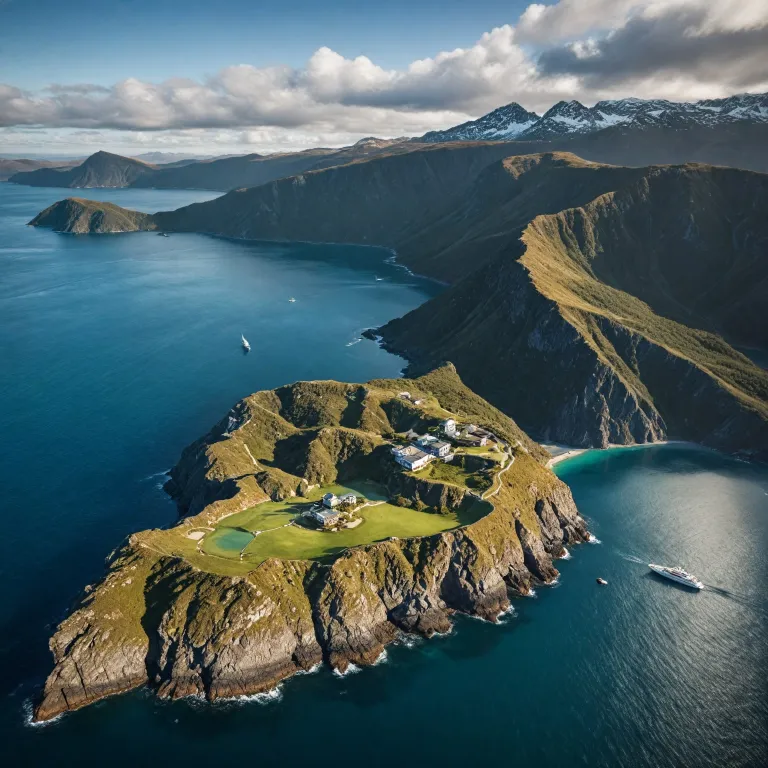
Cape Horn on the map of Chilean luxury travel
When travelers first search for cape horn on map tools, they often picture only a windswept rock at the end of the world. In reality, this legendary cape sits within a wider Chilean luxury landscape, where refined hotels in Patagonia and Tierra del Fuego frame the route south toward Hornos Island. Understanding how the horn, the cape, and the surrounding area appear on a detailed map helps you align your hotel booking with the specific experiences you want, from serene fjords to the raw Drake Passage.
On any accurate topographic map of south Chile, you will see Cape Horn marked as the southernmost headland of the Tierra del Fuego archipelago. It lies at approximately 55.98 degrees south and 67.27 degrees west, anchoring the northern boundary of the Drake Passage between South America and Antarctica. When you position cape horn on map layers that show both land and sea, you can clearly trace the transition from the sheltered Beagle Channel and the Strait of Magellan to the open southern ocean.
For luxury travelers, this cartographic context is not abstract ; it directly shapes how you choose hotels and routes. High end lodges in Patagonia and Tierra del Fuego use large wall maps, vector map prints, and digital renderings to explain how far you are from Cape Horn, the strait, and the main ports. When you compare cape horn on map views with your preferred level of remoteness, you can decide whether to stay closer to the main hubs in south Chile or in more secluded properties that feel almost within sight of the cape itself.
Reading maps, images, and data before you book
Modern travelers rarely rely on a single static map when planning a trip to south Chile and Cape Horn. Instead, they move between satellite images, topographic map layers, and curated photos images from hotels and cruise operators to understand the terrain. When you place cape horn on map platforms that combine elevation data and nautical information, you gain a clearer sense of how rugged the area is and why navigation remains challenging.
High resolution images Chile tourism boards provide often include overlays that highlight the cape, the horn, and the surrounding islands within the wider Patagonia region. These visuals may be accompanied by stock illustrations and vector map graphics that simplify complex coastlines for easier reading. For guests comparing luxury hotels, such materials are invaluable because they show how each property relates to key features like Tierra del Fuego, the Strait of Magellan, and the Drake Passage.
Many premium booking sites now integrate render topographic tools that allow you to tilt and rotate a 3D map Chile model of the south. This kind of chile render helps you visualize the distance between your chosen hotel and Cape Horn, as well as the likely sea conditions along the route. When you examine cape horn on map views alongside curated photos, free photos galleries, and royalty free stock pictures, you can better judge whether marketing images match the real topographic context.
From Tierra del Fuego to Cape Horn: mapping your luxury route
Any serious itinerary that places cape horn on map planning tools will start by situating you within Tierra del Fuego. The twin names tierra del and del fuego appear on charts as a fragmented archipelago, with Hornos Island marking the final cape at the southern edge. Luxury travelers typically fly into major hubs in south America, then connect to southern Chile before continuing by sea toward the horn.
When you look at a detailed map south of Patagonia, you will notice several possible maritime routes weaving through fjords and channels. Some itineraries emphasize the historic Strait of Magellan, while others trace the Beagle Channel before turning toward Cape Horn and the open Drake Passage. Placing cape horn on map layers that show both political boundaries and physical geography helps you understand how close you remain to Chilean shores at each stage.
High end cruise lines and expedition style hotels often provide guests with custom vector map booklets that highlight the area around Cape Horn in relation to protected reserves. These materials may include horn stock diagrams, stock illustrations of prevailing winds, and render topographic sections showing the elevation of nearby islands. By comparing these with online photos images and images Chile tourism portals share, you can choose whether you prefer a shorter scenic loop or a longer voyage that spends more time near the cape and the southern ocean.
Choosing luxury hotels through maps, photos, and stock images
For travelers focused on comfort, the way a booking site presents cape horn on map visuals can be as important as the room photos. A refined platform will combine accurate map Chile data, curated photos images, and clear descriptions of transfer times from airport to pier and from pier to cape. This level of detail allows you to evaluate whether a property in Patagonia or Tierra del Fuego truly fits your expectations for access to the horn and the surrounding area.
Many premium hotel sites use royalty free and paid horn stock resources to illustrate the drama of the southern seas. However, discerning guests should look beyond generic stock pictures and seek images Chile photographers have taken that show the real topographic profile of the islands. When you compare these with a topographic map and a high quality vector map, you can verify whether the advertised views toward Cape Horn and the Drake Passage are realistic.
Some platforms also provide free photos galleries and pictures royalty collections that highlight interior design, spa facilities, and dining rooms alongside exterior landscapes. While these free photos and stock illustrations are useful, they should be read together with precise map south references and render topographic diagrams. By aligning cape horn on map coordinates with authentic images of the area, you reduce the risk of booking a hotel that feels visually impressive online but geographically distant from the maritime heritage you came to experience.
Weather, safety, and the role of topographic data
Anyone placing cape horn on map tools for a real journey must respect the region’s reputation for harsh weather. Historical records note that Willem Corneliszoon Schouten first rounded Cape Horn in 1616, using traditional instruments such as the astrolabe and compass to navigate these dangerous waters. Today, even with advanced data and satellite images, the horn and the cape remain synonymous with strong winds, powerful currents, and rapidly changing conditions.
Luxury hotels and cruise operators in south Chile rely heavily on topographic map resources and real time weather feeds to plan safe excursions. They study the shape of the islands, the depth of nearby channels, and the patterns of the Drake Passage to decide when it is prudent to approach Cape Horn. When you examine cape horn on map layers that include elevation data and nautical information, you can better appreciate why itineraries sometimes change at short notice.
Responsible booking platforms will present this reality clearly, using vector map graphics, chile render animations, and stock illustrations to explain potential route adjustments. Many also share curated photos images and images Chile meteorological agencies provide to show typical sea states in the area. By combining these visuals with practical advice about the strait, Tierra del Fuego, and the wider Patagonia region, they help guests understand that the allure of the southern ocean comes with inherent unpredictability.
Integrating Cape Horn into a wider Chilean luxury itinerary
For many guests, placing cape horn on map planning tools is only one part of a broader Chilean journey. A sophisticated itinerary might combine time in Patagonia, a stay near Tierra del Fuego, and even a contrasting escape to the Atacama Desert in the north. Resources such as this detailed guide on where exactly the Atacama Desert is and how to stay there in style can help you balance extreme south and extreme north within one trip.
When you view Chile as a long vertical strip on a vector map of south America, the distance between Atacama and Cape Horn becomes striking. Booking platforms that overlay cape horn on map chile render tools, along with domestic flight data, allow you to see how many connections are needed between each area. This perspective helps you decide whether to focus solely on the southern area around the horn and the strait or to include additional regions.
High quality sites will also provide free photos and pictures royalty collections that compare landscapes across Chile, from desert to glacier. By examining these images Chile tourism boards and hotels share, alongside horn stock visuals and render topographic diagrams, you can craft a journey that feels coherent rather than rushed. In every case, aligning your hotel choices with precise map cape references and realistic travel times ensures that the legendary cape and its surrounding waters become a highlight rather than a logistical challenge.
Key statistics for mapping Cape Horn luxury travel
- Cape Horn sits at approximately 55.98 degrees south latitude and 67.27 degrees west longitude within the Tierra del Fuego archipelago.
- The headland marks the northern boundary of the Drake Passage, where the Atlantic and Pacific Oceans meet.
- The elevation of Cape Horn reaches roughly 324 meters above sea level, shaping its dramatic topographic profile.
- The region forms part of the Cape Horn Biosphere Reserve, which has seen a steady increase in tourism activity.
- Navigation remains hazardous due to strong winds, large waves, and powerful currents around the cape.
Essential questions about Cape Horn and Chilean luxury stays
Why is Cape Horn significant for travelers planning luxury trips in Chile ?
It marks the northern boundary of the Drake Passage and the meeting point of the Atlantic and Pacific Oceans. For luxury travelers, this significance translates into access to some of the most dramatic sea routes on earth, often combined with refined hotels in Patagonia and Tierra del Fuego. When you place cape horn on map tools while planning, you can align your choice of high end properties with opportunities to sail near this historic maritime landmark.
Is Cape Horn the southernmost point of South America for visitors seeking remote experiences ?
Yes, it is the southernmost headland of the Tierra del Fuego archipelago. This makes it a symbolic endpoint for travelers who want to reach the far south of the continent while still enjoying Chile’s premium hospitality infrastructure. By understanding exactly where cape horn on map resources position this headland, guests can better evaluate which hotels and cruises offer the closest and safest access.
What navigation challenges around Cape Horn should luxury travelers be aware of ?
What are the navigation challenges around Cape Horn? Strong winds, large waves, and strong currents make navigation hazardous. Even on well equipped expedition ships serving the luxury market, itineraries may change due to weather, so guests should choose booking platforms and hotels that communicate clearly about safety protocols and potential route adjustments.