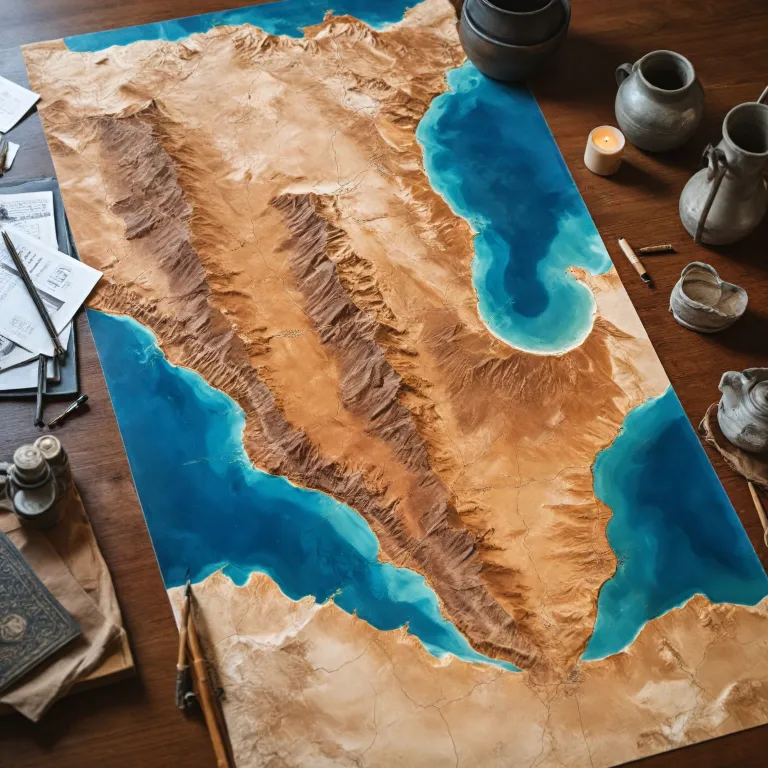
Reading the desert atacama map for luxury trip planning
A precise desert Atacama map is the quiet backbone of every refined itinerary. When you plan premium stays in northern Chile, this cartographic layer turns abstract landscapes into navigable experiences that match your standards. For travelers comparing luxury hotels across the region, understanding how the desert covers more than 105 000 km² helps you judge distance, elevation, and comfort in a single glance.
The Atacama Desert is a high plateau in northern Chile, framed by the Andes Mountains to the east and the Pacific Ocean to the west. This geography shapes every decision about where to sleep, which national park to visit, and how far your driver will travel in one day. A good desert map highlights the Antofagasta Region, San Pedro de Atacama, and the west Andes corridor, allowing you to align hotel locations with the most striking sites.
On a detailed map Atacama travelers see how the desert driest zones cluster between the Pacific coast and the Andes. This is where conditions Atacama become extreme, with desert dry basins, salt flats, and canyons that resemble another planet. “Its extreme aridity is due to its location in the rain shadow of the Andes and the cold Pacific currents, which prevent moisture from reaching the region.”
For luxury guests, this data is not abstract ; it informs how close your suite should be to astronomical observatories or to the Chajnantor Plateau at about 5 000 meters elevation. High elevation affects sleep quality, spa choices, and even the wine list curated by your hotel sommelier. A refined desert map lets you balance dramatic scenery with comfortable acclimatization across several regions.
Choosing the right region chile for premium stays
When you study any desert Atacama map, the first strategic choice is which region Chile segment best suits your style. Most luxury travelers focus on the Antofagasta Region, where San Pedro de Atacama serves as the main hub for high end properties. This area combines access to iconic sites with a compact area that limits long transfers across the desert.
The Antofagasta Region sits in northern Chile, bordered by the Pacific Ocean and the Andes Mountains, and its elevation gradients are clearly visible on a good desert map. Hotels closer to the Pacific coast enjoy slightly milder temperatures and more moist air, while those nearer the west Andes offer sharper desert dry panoramas. By comparing regions on a map Atacama visitors can decide whether they prefer salt flats at lower elevation or stargazing lodges near the high plateau.
San Pedro de Atacama lies roughly at 2 400 meters, which many guests find a comfortable elevation for multi day stays. From here, luxury properties arrange private excursions to national park areas, canyon viewpoints, and remote desert driest basins. A precise desert map helps concierges schedule each day so that guests gradually ascend, reducing the impact of thin air while still reaching the most dramatic sites.
Environmentally conscious travelers often pair a desert Atacama stay with premium eco hotels in other Chile regions. This broader region Chile perspective lets you contrast the mining heritage of Antofagasta with lush valleys further south. Reading the desert map alongside national tourism data also clarifies how protected areas, private reserves, and mining concessions intersect around your chosen hotel.
Mapping iconic sites, canyons, and salt flats around your hotel
A refined desert Atacama map does more than show roads ; it layers experiences around your chosen property. In northern Chile, the most exclusive hotels position themselves within easy reach of salt flats, canyon systems, and national park boundaries. By studying a detailed desert map before booking, you can ensure that sunrise, spa time, and stargazing all fit comfortably into each day.
Key attractions cluster around San Pedro de Atacama, including Valle de la Luna, high altitude lagoons, and vast salt flats that reflect the Andes Mountains. These sites appear as distinct polygons on a map Atacama travelers can read alongside elevation data, helping you anticipate temperature swings and driving times. Some areas experienced nearly 400 years without recorded rainfall between 1570 and 1971, which explains the stark, desert driest landscapes you see from your suite.
Many guests compare Atacama’s canyons with Death Valley in the United States, yet the conditions Atacama are often even more extreme. The desert dry basins, sculpted by wind rather than water, create narrow passages that luxury guides navigate with precise GPS data. A good desert map also marks national park limits, ensuring your private picnic or sunset aperitif respects conservation rules.
Wellness focused travelers often combine these rugged day excursions with evenings in luxury spa hotels elsewhere in Chile. This broader region Chile approach lets you contrast the desert covers of the north with glacial landscapes in the south. When you overlay all these areas on a single desert Atacama map, your itinerary becomes a curated journey across several climates and elevations.
Climate, moist air, and safety planning from the map
Understanding climate through a desert Atacama map is essential for safe, comfortable luxury travel. The Atacama Desert is widely regarded as one of the desert driest environments on Earth, with average annual rainfall around 15 millimetres. On a regional desert map, you can see how the Andes Mountains and the Pacific Ocean work together to limit moist air reaching northern Chile.
Cartographers and climatologists use satellite imagery and meteorological data to refine each desert map, highlighting zones where conditions Atacama become particularly harsh. Some basins receive virtually no rain, while higher elevation areas near the west Andes occasionally see rare snowfall. Increased instances of rare precipitation events, including snowfall in July 2025, have drawn additional scientific attention to this region Chile corridor.
For travelers, this data translates into practical packing lists and hotel choices. Due to extreme aridity, travelers should carry ample water, even when chauffeured between premium properties and remote sites. Protective clothing and sunscreen are essential due to high UV exposure, and you should be prepared for significant temperature fluctuations between day and night.
Luxury concierges rely on the same data to time excursions to salt flats, canyon viewpoints, and national park lookouts. By reading a desert Atacama map with hourly forecasts, they can adjust each day’s area to avoid strong winds or rare storms. This is particularly important near high elevation sites such as the Chajnantor Plateau, where thin air and cold nights require careful planning for comfort and safety.
Cross border context: peru, mining heritage, and cultural layers
A sophisticated desert Atacama map also situates northern Chile within the wider South America context. To the north lies Peru, and to the east the Andes form a natural barrier that shapes both climate and culture. When you zoom out on a desert map, you see how the Atacama Desert stretches across borders, yet the Antofagasta Region in Chile remains a distinct administrative and tourism hub.
This region Chile area has a long mining history, visible on many maps as rail lines, access roads, and marked mining concessions. For luxury travelers, these mining sites can be framed as part of curated day excursions that contrast industrial heritage with pristine salt flats. Guides often reference Spanish and indigenous place names, helping guests understand how Atacameño people once navigated the same desert dry corridors.
Some guests arrive having read background information on platforms such as Wikipedia, then refine their understanding with on the ground data from expert guides. A good desert Atacama map will label both Spanish and indigenous toponyms, making it easier to connect stories about the Atacameño people with specific canyons or oases. This cultural layering enriches evenings back at your hotel, where curated libraries and wine tastings extend the narrative.
Because the desert covers such a vast area, cross border itineraries sometimes combine Peru’s coastal cities with northern Chile’s high plateau. In these cases, maps showing the Pacific coast, west Andes, and inland desert help you visualize how moist air from the ocean rarely penetrates the interior. Understanding this pattern deepens appreciation for every green courtyard, shaded pool, and carefully irrigated garden within your chosen luxury property.
Designing multi day luxury itineraries with precise mapping
For premium travelers, the real value of a desert Atacama map emerges when designing multi day itineraries anchored by exceptional hotels. Each day becomes a carefully measured arc between your property, a selected area of the Atacama Desert, and a restorative evening experience. By plotting elevation changes, driving times, and national park boundaries, you avoid rushed schedules and maximize comfort.
Many guests start in Santiago, then fly north to the Antofagasta Region before transferring by road to San Pedro de Atacama. Using a detailed desert map, concierges plan a first day focused on gentle walks near town, allowing guests to adjust to the elevation. Subsequent days might include sunrise at salt flats, afternoon rest by the pool, and evening stargazing under some of the clearest skies in South America.
When you overlay your hotel’s position with key sites on a map Atacama planners can balance iconic highlights with quieter, lesser known canyons. This is where expert use of data, from satellite imagery to local trail records, enhances both safety and exclusivity. Travelers who appreciate refined logistics often pair Atacama with elegant day trips from Santiago, creating a Chile wide narrative that moves from Pacific coast to desert plateau.
Throughout, the desert driest conditions and limited moist air require hotels to coordinate hydration, sun protection, and temperature management. High end properties in northern Chile typically provide detailed briefings, printed desert map extracts, and GPS enabled devices for private drivers. With this level of preparation, the vast desert covers on your map transform from intimidating emptiness into a finely orchestrated backdrop for luxurious, safe, and meaningful travel.
Key statistics for understanding the atacama desert
- Approximate area of the Atacama Desert plateau in Chile : 105 000 km².
- Average annual rainfall across core desert areas : about 15 millimetres.
- Typical elevation of the Chajnantor Plateau near major observatories : around 5 000 meters above sea level.
Essential questions about the atacama desert for luxury travelers
Why is the Atacama Desert considered one of the driest places on Earth?
Its extreme aridity is due to its location in the rain shadow of the Andes and the cold Pacific currents, which prevent moisture from reaching the region. On any detailed desert Atacama map, you can see how the Andes Mountains block moist air from the Amazon, while the Pacific Ocean’s cold Humboldt Current stabilizes the atmosphere along the Pacific coast. This combination leaves northern Chile with desert dry basins where the desert covers vast areas that receive almost no rain.
What notable features are found in the Atacama Desert?
Features include the Valle de la Luna, salt flats, and the Chajnantor Plateau, home to the ALMA observatory. These sites appear clearly on a map Atacama travelers can use to plan day excursions from luxury hotels in the Antofagasta Region. Many guests also visit high altitude lagoons, canyon systems reminiscent of Death Valley, and national park areas that showcase the contrast between the west Andes and the Pacific coast.
How do people survive and live in the Atacama Desert?
Inhabitants rely on limited water sources, such as underground aquifers, and have adapted to the harsh conditions through specialized agriculture and resource management. Historically, Atacameño communities and later mining settlements used precise knowledge of each area, elevation, and site to move between oases marked on local desert maps. Today, towns in northern Chile combine modern infrastructure with traditional practices, ensuring that even in the desert driest zones, communities can manage scarce moist air and water resources efficiently.
Trustful expert sources
- Encyclopaedia Britannica
- NASA Earth Observatory
- University of Antofagasta research publications