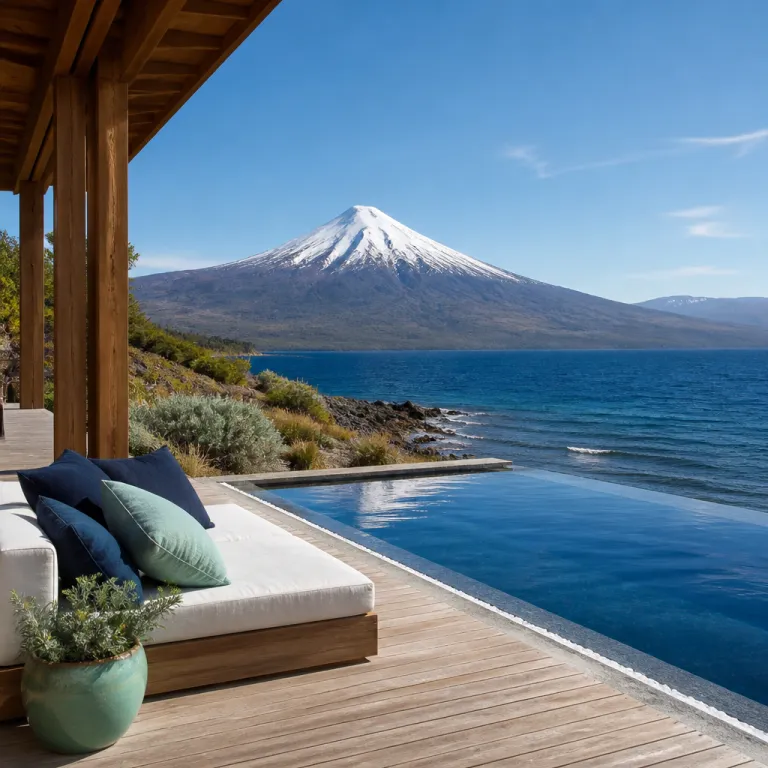
Staying in style near chilean volcanoes in the southern Andes
Chile offers a rare blend of refined hospitality and raw volcanic drama. Around the most iconic Chilean volcanoes, luxury Andean mountain lodges place you within sight of a smoking cone yet cocoon you in comfort. These properties balance proximity to volcanic activity with meticulous safety standards, discreet service, and close coordination with scientific agencies.
The Chilean government works with the National Geology and Mining Service (SERNAGEOMIN) to monitor every major volcano in the southern Andean chain. Their teams track seismic signals, thermal anomalies, and gas emissions to understand the Andean volcanic systems that shape this long volcanic arc. According to the Smithsonian Institution’s Global Volcanism Program (GVP, 2023), there are approximately 90 active volcanoes in Chile, a figure echoed by SERNAGEOMIN in public briefings, which makes expert monitoring essential for any high end lodge operating near these landscapes.
Guests often ask whether Chilean volcanoes are dangerous for luxury travel. The answer is nuanced, because volcanoes such as Villarrica and Llaima show frequent eruptions yet are framed by robust early warning systems. Villarrica, for instance, produced notable eruptions in 1964, 1971, and 2015, and Chile monitors volcanic activity through dense seismic networks and satellite data. This evidence allows premium properties to coordinate evacuation plans, rehearse drills with staff several times a year, and adjust excursions in real time.
In winter, some travelers combine ski in ski out stays with panoramic views of snow capped volcanic cones. A prime example is the new Aconcagua ski residences at Valle Nevado, which mark a new chapter for Chilean mountain luxury while still respecting the broader southern Andean volcanic context. From these elevated suites, you can see the long arc of the Andes and appreciate how global volcanism has sculpted the surrounding peaks over hundreds of thousands of years.
Luxury lodges near Chilean volcanoes typically sit at conservative distances from active craters, often 15–30 kilometers away. They are usually located on older lava terraces, glacial valleys, or forested slopes that show Holocene deposits but no recent eruptive vents. Before confirming a reservation, ask the concierge how they coordinate with local municipalities, which color alert levels they follow from SERNAGEOMIN, and what protocols they apply if seismic instruments detect unusual volcanic activity.
Responsible travelers should also check activity status before visiting and follow local guidelines at all times. The most reputable Andean lodges share real time updates from Chilean authorities and international volcanology organizations with their guests. As one concierge in the Lake District explains, “We brief guests every evening on current alert levels so they can enjoy the spectacle of Chilean volcanoes while understanding both the beauty and the risk.”
Villarrica, Llaima and the southern andean volcanic arc in luxury comfort
Few places capture the tension between fire and ice like the southern Andean volcanic arc around Villarrica and Llaima. Here, premium lakeside lodges and forest retreats offer private hot springs, curated wine lists, and helicopter transfers over snow clad volcanoes. The contrast between tranquil design and the restless volcanic field outside your window is unforgettable.
Near Villarrica, some lodges sit on ancient lava flows that date from Holocene eruptions, with basalt boulders integrated into spa terraces and fire pits. On clear days, you can see the perfect cone of this volcano rising above Lake Villarrica, while guides explain how eruptions in 1964, 1971, and 2015 reshaped local valleys. The most active volcano in Chile is widely considered to be Villarrica, based on its frequent historical eruptions and continuous monitoring, so operators here work closely with agencies such as SERNAGEOMIN to align guest excursions with current volcanic activity levels and official alert colors.
Further north, Llaima dominates the skyline of Conguillío National Park and anchors another cluster of discreet Andean lodges. These properties often frame views toward Sierra Nevada and the Los Venados volcanic field, where smaller vents and cones dot the forested landscape. Helicopter tours trace the line of the southern Andean volcanic arc, linking Villarrica, Llaima, and Nevados de Chillán in a sweeping panorama of craters, lava domes, and glacial valleys.
Guests with a deeper interest in global volcanism can request private briefings with local geologists. Many lodges keep detailed maps showing Holocene deposits, evidence of past eruptions, and the structure of each volcanic complex. This context helps you appreciate why some valleys remain off limits due to lahar or ash fall hazards, while others host vineyards, thermal resorts, and carefully planned luxury developments.
High end properties near Nevados de Chillán often combine ski slopes with geothermal spas. From your suite, you may see steam rising from fumaroles that belong to the broader Nevados Chillán volcanic complex, yet you remain safely outside designated hazard zones. These lodges coordinate closely with the Chilean government, which oversees volcanic activity to ensure public safety and protect local communities, especially after eruptive episodes such as the 2015–2018 cycle at Nevados de Chillán.
When planning your days around Villarrica or Llaima, ask the concierge to balance adventure and rest. One day might include a guided hike across old lava fields, while the next focuses on spa rituals and wine pairings that showcase the southern terroir. This rhythm allows you to engage with Chile’s volcanoes intellectually and visually, without sacrificing the restorative side of a luxury escape.
Puyehue, Cordon Caulle and refined stays amid recent eruptions
The Puyehue Cordon Caulle region offers a compelling case study in how luxury hospitality adapts to recent eruptions. In this sector of the southern Andean volcanic arc, ash covered valleys and new lava domes sit beside pristine forests and tranquil lakes. High end lodges here lean into the story of renewal, turning the scars of eruptions into educational and aesthetic experiences.
When you book a stay near Puyehue, you often overlook the broad Puyehue Cordon Caulle volcanic complex from your suite. Guides explain how eruptions in 1960 and 2011–2012 reshaped river courses, created new geothermal fields, and deposited ash that now nourishes dense vegetation. This living evidence of Holocene and more recent activity is visible from panoramic decks, where you can enjoy Chilean wines while tracing the outline of the cordon on the horizon.
Some lodges organize helicopter flights that follow the line of the volcanic arc from Puyehue toward Calbuco and beyond. From the air, you see how individual volcanoes such as Calbuco, Lascar, and San Pedro fit into the broader Andean volcanic systems that define Chile. Pilots often point out older structures like Cerro Azul and Planchón Peteroa, explaining how their eruptions over thousands of years contributed to the current landscape.
On the ground, carefully marked trails lead across cooled lava fields and ash plains. Luxury properties partner with certified guides who understand both the geology and the safety protocols issued by Chilean authorities. Before each excursion, staff review the latest seismic and satellite data, then adjust routes if any sign of unusual volcanic activity appears, following the same alert scales used by SERNAGEOMIN.
Travelers who appreciate detailed mapping will value the elegant guide to the Valle Nevado trail map for luxury stays, which illustrates how premium resorts can coexist with dynamic mountain terrain. The same philosophy applies around Puyehue and Cordon Caulle, where trails, viewpoints, and helipads are planned with both guest experience and hazard mitigation in mind. This approach reflects Chile’s broader goals to understand volcanic behavior and mitigate risks while welcoming discerning visitors.
During quiet periods that can last many years, the Puyehue region feels serene and almost pastoral. Yet the presence of Chilean volcanoes remains tangible in the hot springs, mineral rich soils, and jagged ridgelines that frame each sunset. Staying here connects you to the long Holocene story of eruptions and recovery, while your lodge provides every modern comfort.
Remote Andean retreats near lesser known chilean volcanoes
Beyond the famous names, a constellation of remote Andean lodges offers access to lesser known Chilean volcanoes. These properties appeal to travelers who value privacy, scientific curiosity, and a sense of being far from the usual routes. The landscapes feel almost unknown, yet they are carefully mapped and monitored by Chilean and international volcanology teams.
In the high desert of the north, luxury camps near Lascar and San Pedro volcano provide stargazing domes, private astronomers, and guided visits to geothermal fields. From these elevated plateaus, you can see the long line of the Andean volcanic arc stretching toward Bolivia and Argentina. Guides explain how volcanoes such as Lascar, San Pedro, and the complex around Ojos del Salado fit into the broader pattern of global volcanism.
Farther south, some lodges position themselves near volcanic complexes like Cerro del Azufre and Del Salado. These names rarely appear in mainstream travel brochures, yet they form part of intricate volcanic fields that have evolved over hundreds of thousands of years. Guests can request helicopter overflights that trace the outlines of old calderas, Holocene cones, and lava plateaus that remain largely unknown to casual visitors.
On the Pacific side, a handful of refined eco lodges on Robinson Crusoe Island highlight the volcanic origins of this remote archipelago. Here, cliffs, sea caves, and rugged peaks tell the story of submarine eruptions and slow uplift along the Chilean margin. Guided hikes reveal evidence of past volcanic activity in layered basalt, tuff formations, and weathered lava flows that now host rare plant species.
Closer to central Chile, some Andean retreats overlook volcanic fields near Sierra Nevada and Los Venados. These areas feature clusters of small cones and maars rather than a single dominant volcano, which creates a more subtle but equally fascinating landscape. Lodges here often emphasize photography, birdwatching, and quiet contemplation, with optional geology walks for guests who want to understand how these volcanic fields formed.
When evaluating remote properties, ask how they coordinate with the Chilean government and local communities. The most responsible lodges maintain direct contact with monitoring agencies, keep seismographs or access to real time data, and train staff in emergency procedures. This level of preparation allows you to enjoy the solitude of little known Chilean volcanoes while trusting that expert systems stand behind the scenes.
Designing your days around chilean volcanoes in luxury lodges
Planning an itinerary around Chilean volcanoes requires more than choosing a scenic view. In the best Andean lodges, every day is curated to balance exploration, education, and rest. This thoughtful pacing lets you absorb the scale of the volcanic arc without feeling rushed or overwhelmed.
Many travelers start with gentle activities that introduce the landscape. A morning walk across old lava flows near Villarrica or Nevados de Chillán reveals textures, colors, and plant life that have colonized Holocene deposits. Guides point out evidence of past eruptions, such as ash layers in riverbanks or warped tree trunks, while explaining how local communities adapted over the years.
On subsequent days, you might add more ambitious excursions. Options include helicopter flights over Cordon Caulle, ski touring near Nevados Chillán, or high altitude hikes toward the flanks of Llaima and Sierra Nevada. Each activity is timed to current volcanic activity reports, which lodges receive through seismic monitoring networks and satellite imagery shared by Chilean and international partners.
Afternoons often shift toward wellness and gastronomy. Thermal pools fed by volcanic aquifers provide natural hot water for spa circuits, while chefs design menus that highlight ingredients grown in mineral rich soils around the southern Andean valleys. Wine tastings may feature vineyards that thrive on volcanic slopes, linking your glass directly to the geology outside.
Evenings are ideal for reflection and stargazing. In clear mountain air, you can see the Milky Way arching above the dark silhouettes of distant volcanoes, a reminder of how global volcanism and plate tectonics shape our planet. Some lodges invite geologists or park rangers to give talks about Chilean volcanoes, sharing timelines that stretch from Pleistocene eruptions to the present Holocene period.
For travelers who appreciate cultural context, concierges can arrange visits to local communities that live near volcanoes such as Villarrica, Llaima, and Calbuco. These encounters reveal how residents integrate respect for volcanic forces into daily life, from building practices to seasonal rituals. By the end of your stay, you will have experienced Chilean volcanoes not only as dramatic scenery but as living systems intertwined with human stories.
Safety, monitoring and choosing the right Andean mountain lodge
Safety is the quiet foundation of every successful stay near Chilean volcanoes. Chile has invested heavily in monitoring networks that track seismic signals, gas emissions, and ground deformation across its volcanic arc. This infrastructure allows luxury and premium lodges to operate confidently in regions shaped by eruptions over thousands of years.
The National Geology and Mining Service coordinates with international volcanology organizations to maintain early warning systems. Tools such as seismographs and thermal cameras provide continuous data on volcanic activity at key sites including Villarrica, Llaima, Calbuco, and Nevados de Chillán. When anomalies appear, alerts flow quickly to regional authorities, local communities, and hospitality operators who may need to adjust guest programs.
Guests sometimes worry about the unknown, especially when media images focus on dramatic eruptions. In practice, most luxury lodges are located at conservative distances from active craters, often on older terraces or in valleys with clear evacuation routes. Properties near features like Cerro Azul, Planchón Peteroa, Cerro del Azufre, and Del Salado work with experts to map potential hazards and design infrastructure accordingly.
Before booking, ask specific questions about how a lodge engages with monitoring agencies. Reputable properties can explain which volcanoes they track, how often they receive updates, and what steps they would take if volcanic activity increased. They should also encourage you to check official channels and follow local guidelines, reinforcing a culture of shared responsibility between guests and hosts.
Some high end operators extend this commitment to other volcanic regions of Chile, including remote islands and coastal ranges. For example, luxury projects on Robinson Crusoe Island integrate geological assessments into every phase of development, from site selection to trail design. Similar care appears in mountain resorts that frame views of the southern Andean volcanic arc while maintaining strict building codes.
If you are planning a broader Chile itinerary, consider pairing Andean volcano lodges with coastal or island stays that showcase different expressions of Chile’s geology. An insightful option is to explore how quiet luxury is evolving in places like Rapa Nui, as described in this feature on the island’s quiet luxury transformation. This combination deepens your understanding of how volcanic origins, cultural heritage, and contemporary hospitality intersect across the country.
Key figures and timelines about chilean volcanoes
- Approximately 90 active volcanoes are identified across Chile, according to the Global Volcanism Program (updated 2023), placing the country among the most volcanically active on Earth.
- Many of Chile’s most prominent volcanoes, including Villarrica and Llaima, have recorded eruptions throughout the Holocene period, which spans roughly the last ten thousand years of Earth history.
- Monitoring efforts focus on both individual volcanoes and broader volcanic complexes, such as the Puyehue Cordon Caulle system, to understand how eruptions in one sector can influence neighboring areas.
- Chile’s early warning systems combine seismic monitoring, satellite imagery, and ground based observations to reduce risk for local communities and visitors staying in Andean mountain lodges.
- Community preparedness programs emphasize practical guidance such as checking activity status before visiting and following local guidelines, which are especially relevant for travelers booking luxury stays near active volcanoes.
FAQ about chilean volcanoes and luxury Andean lodges
How many active volcanoes are there in Chile ?
There are approximately 90 active volcanoes in Chile, a figure reported by the Global Volcanism Program (most recently in 2023) and widely used by Chilean authorities when planning monitoring and risk mitigation strategies.
What is the most active volcano in Chile ?
The most active volcano in Chile is Villarrica, which has produced frequent eruptions in recent decades, including major events in 1964, 1971, and 2015, and is therefore one of the most closely monitored volcanoes in South America.
Are chilean volcanoes dangerous for luxury travelers ?
Chilean volcanoes do pose risks to nearby communities and visitors, but luxury lodges typically operate at safe distances and coordinate closely with monitoring agencies to adjust activities or evacuate if volcanic activity increases.
How does Chile monitor volcanic activity near hotels and lodges ?
Chile monitors volcanic activity through seismic and satellite data, supported by seismographs, thermal cameras, and field observations that feed into early warning systems used by authorities and hospitality operators.
Can tourists safely visit areas around active chilean volcanoes ?
Tourists can visit areas around active Chilean volcanoes when conditions are stable, but they should always check official activity status before visiting and follow local guidelines provided by authorities and lodge staff.