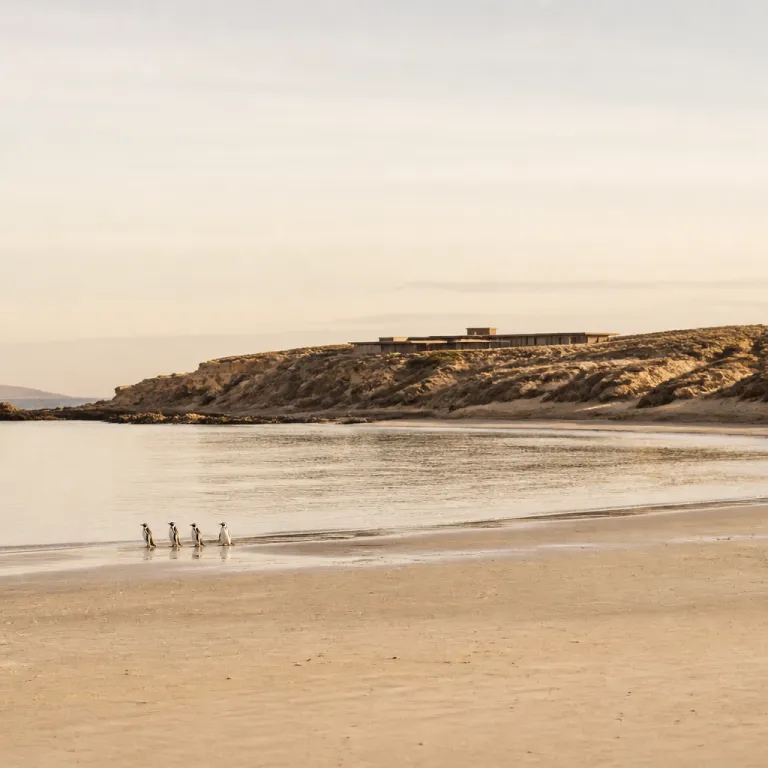
Isla de Chiloé penguins and the rise of refined eco travel
The phrase “Isla de Chiloé penguins” now signals a very specific dream for many travelers. Luxury guests want to see penguins on a wild island in Chile while staying in elegant lodges that respect Chilote culture and the fragile marine environment. On Chiloé Island, that balance between refined comfort and raw nature is finally possible.
At Puñihuil, on the western coast of Chiloé, regulated boat tours glide out towards the islets where Humboldt penguins and Magellanic penguins share rocky ledges. This mixed colony is rare in South America, and the surrounding Los Lagos Region has become a reference point for conservation-focused travel in southern Chile. Operators now design every tour to limit noise, control distances, and keep viewing times to strict hours that protect the birds’ breeding rhythms, following guidelines published by Chile’s National Fisheries and Aquaculture Service (SERNAPESCA, 2022 coastal fauna protocol).
Local authorities and marine biologists classify the area as a priority habitat within the wider Chiloé Archipelago. The goal is to ensure that the Isla de Chiloé penguins experience supports long-term conservation rather than short-term crowds. Eco-tourism growth, increased conservation efforts, and rising visitor numbers are reshaping how premium hotels and lodges operate across the Los Lagos Region, with management plans informed by data from SERNAPESCA’s 2021–2023 Puñihuil monitoring reports.
For travelers, this means that a full-day excursion to Puñihuil can be paired with evenings in a lakeside suite or a hillside villa overlooking the Chilean lake scenery. The best properties on Chiloé Island now coordinate directly with local tour operators and conservation organizations to secure timed departures, private guides, and bilingual naturalists. As one Ancud-based guide from a long-running family operator explains, “If guests understand why we keep our distance, they leave with better photos and a deeper respect for the colony.” This new standard of service is changing expectations for luxury travel throughout Patagonia and the wider Chilean Lake District.
Planning a luxury penguin tour from Puerto Varas and Puerto Montt
Many high-end travelers base themselves first in Puerto Varas, the polished city on the shore of Lago Llanquihue in the Chilean Lake District. From here, the journey towards the Isla de Chiloé penguins becomes a curated route that links volcano views, Chilean lake panoramas, and the sea channels of southern Chile. Luxury concierges in Puerto Varas often arrange private transfers that cross the Chacao Channel before continuing south towards Ancud and Castro.
The drive from Puerto Varas to the ferry terminal near Pargua usually takes around two hours, depending on traffic and weather. Once on the ferry, guests watch Chiloé Island appear slowly, with fishing boats and seabirds marking the entrance to the Chiloé Archipelago. From the landing point on Isla Grande, a driver-guide can continue directly to Ancud, where most Puñihuil penguin excursions depart in small groups or private boats.
Some travelers prefer to start from Puerto Montt, especially when arriving on domestic flights from the Central Valley or other parts of Chile. Puerto Montt offers efficient access to both the Chilean lake landscapes and the coastal routes that lead to the Isla de Chiloé penguins area. High-end hotels in this port city now work with specialist outfitters who understand the regulations around Chiloé National Park, nearby marine protected areas, and the sensitive penguin colonies.
When planning your stay, consider combining a full-day penguin tour with other nature experiences in the wider Patagonia region. Families often pair Puñihuil with kayaking among icebergs in the Aysén fjords, using curated itineraries such as those described in this guide to family-friendly iceberg kayaking in remote Chilean fjords. This multi-region approach allows you to enjoy both the Lake District calm and the dramatic coastal fjords while keeping logistics smooth and comfortable.
Where to stay on Chiloé Island for an elevated penguin experience
Once you reach Isla Grande de Chiloé, the question becomes where to stay for the most rewarding Isla de Chiloé penguins experience. The answer depends on whether you prefer to be close to the Puñihuil launch points or immersed in the cultural heart of the island around Castro. Both options can be luxurious, but they offer very different atmospheres.
Near Ancud, some intimate lodges sit on headlands facing the Pacific, giving you quick access to Puñihuil while still offering spa facilities and refined Chilean cuisine. These properties often arrange early-morning departures so you reach the penguins before the main crowds, then return for long lunches featuring seafood from the Los Lagos coast. In this northern part of Chiloé Island, the focus is firmly on wildlife, windswept beaches, and the open ocean.
Around the city of Castro, luxury hotels lean into the cultural richness of the Chiloé Archipelago. Guests wake to views of colorful palafitos, then spend the day visiting wooden churches that form part of the UNESCO-listed Churches of Chiloé ensemble. Even here, concierges can arrange a full-day trip to Puñihuil, combining the Isla de Chiloé penguins with stops at local markets and small fishing coves.
Further south, new lodges are quietly opening along Chile’s Carretera Austral, extending the network of high-end stays across Patagonia. Many of these properties are profiled in this overview of boutique lodges emerging along the Carretera Austral, which helps travelers link Chiloé Island with remote fjords and national park landscapes. By combining these stays, you can move from the penguins of Puñihuil to glacier-carved valleys without sacrificing comfort or service.
How luxury lodges integrate conservation of the Isla de Chiloé penguins
High-end hotels around the Chiloé Archipelago now understand that the Isla de Chiloé penguins are not just an attraction but a responsibility. Many properties support local conservation organizations that monitor Humboldt and Magellanic penguin populations near Puñihuil. Recent counts by Chile’s National Fisheries and Aquaculture Service (SERNAPESCA) and independent researchers indicate several hundred breeding pairs of each species in this area, underscoring how vulnerable the colony remains (see SERNAPESCA, “Monitoreo de Pingüinos en Puñihuil 2021–2023”).
To reduce pressure on the penguins, lodges encourage guests to join regulated boat tours that follow strict guidelines on distance, speed, and group size. These tours typically operate only during specific hours between September and March, aligning with the breeding season and the molting period as outlined in the regional management plan for marine fauna (Gobierno Regional de Los Lagos, 2020). The innovation of regulated boat tours to minimize disturbance has become a model for other wildlife sites in South America that face similar visitor pressures.
Guests are briefed on simple but effective practices before each tour, such as wearing waterproof clothing, keeping voices low, and respecting wildlife guidelines. Many luxury properties provide binoculars and high-quality cameras so that close approaches are unnecessary, preserving the natural behavior of the penguins. This approach allows the Isla de Chiloé penguins experience to remain intimate and educational without compromising animal welfare.
Behind the scenes, some of the most respected Chilean hotel brands are rethinking their sustainability strategies in response to these conservation needs. The implications of these changes for guests are explored in depth in this analysis of how a major Chilean hotel merger is reshaping guest experiences. As these standards spread from Chiloé Island to the wider Patagonia and Lake District regions, travelers can expect more transparent conservation commitments and better-designed wildlife excursions.
Linking Chiloé Island with Patagonia national parks in one itinerary
Many travelers planning a luxury trip to Chile want to combine the Isla de Chiloé penguins with the great national parks of Patagonia. This is entirely feasible when you understand the geography of the Los Lagos and Aysén regions and how they connect to the Central Valley and further south. The key is to treat Chiloé Island as the coastal chapter of a longer journey that also includes inland mountains and glaciers.
From Castro or Ancud, you can return to Puerto Montt or Puerto Varas and then fly south towards gateways such as Balmaceda or Punta Arenas. These flights link the Chilean lake landscapes with iconic national park areas like Torres del Paine or the Aysén fjords, where kayaking and glacier viewing take center stage. In this way, the Isla de Chiloé penguins become one highlight among several, rather than the sole focus of your time in southern Chile.
Within the Los Lagos Region itself, travelers can also explore protected areas such as Alerce Andino National Park or Chiloé National Park. These parks offer dense temperate rainforest, wild beaches, and viewpoints where you can appreciate how the Chiloé coastline merges with the Pacific. A full-day hike in a national park pairs well with a more relaxed boat-based penguin tour, giving your itinerary both movement and rest.
Luxury lodges and hotels now design multi-stop itineraries that move guests smoothly between the Chilean Lake District, the Chiloé Archipelago, and the deeper Patagonia wilderness. Transfers, guides, and internal flights are coordinated so that you spend more hours on experiences and fewer on logistics. This integrated approach is particularly valuable for families or couples who want to see penguins, forests, and glaciers in one coherent journey.
Cultural layers around the Isla de Chiloé penguins experience
While the Isla de Chiloé penguins draw many visitors, the cultural context of the island is just as compelling. Chilote identity has been shaped by centuries of seafaring, agriculture, and Catholic devotion, visible in the wooden churches that dot the landscape. Staying in a luxury hotel here means engaging with this culture, not standing apart from it.
The Churches of Chiloé ensemble, recognized for its wooden architecture and vivid colors, stretches across Isla Grande and smaller islands in the Chiloé Archipelago. Many properties in and around the city of Castro offer guided visits that combine church stops with local markets and traditional curanto meals. These excursions help guests understand how faith, community, and the sea intertwine in this part of South America.
Even the journey across the Chacao Channel carries cultural meaning, as ferries share space with fishing boats that still support many families in the Los Lagos economy. Conversations with local guides often touch on how climate change, tourism, and shifting fish stocks are reshaping life on Chiloé Island. When you then head out to see the penguins at Puñihuil, the experience feels rooted in a living culture rather than a simple wildlife checklist.
For many travelers, this blend of wildlife, culture, and comfort is what makes the Isla de Chiloé penguins experience unique within Chile and the wider Patagonia region. Luxury hotels that prioritize local partnerships, fair employment, and cultural programming add depth to what might otherwise be a quick photo stop. In this way, every stay contributes to both conservation goals and the resilience of Chilote communities.
Key figures for the Isla de Chiloé penguins and luxury travel
- The Puñihuil area near Ancud hosts one of the most significant mixed colonies of Humboldt and Magellanic penguins in southern Chile, with monitoring programs by SERNAPESCA and academic teams indicating several hundred breeding pairs of each species (SERNAPESCA, “Monitoreo de Pingüinos en Puñihuil 2021–2023”).
- The main viewing season for the Isla de Chiloé penguins runs from September to March, covering arrival, breeding, and molting periods, which concentrates wildlife-focused tourism into roughly six to seven months each year according to the regional management plan for marine fauna (Gobierno Regional de Los Lagos, 2020).
- Regulated boat tours from Ancud typically last between two and three hours, allowing enough time for observation and photography while limiting disturbance to the penguins’ natural behavior, in line with SERNAPESCA’s recommended maximum viewing windows.
- Eco-tourism growth in the Los Lagos Region has led to a steady increase in visitor numbers to Chiloé Island, which in turn has generated more funding for conservation and community projects linked to the penguin colonies, as summarized in recent tourism statistics from SERNATUR Los Lagos (2022).
FAQ about luxury stays and Isla de Chiloé penguins
When is the best time to see penguins in Chiloé ?
The best time to see the Isla de Chiloé penguins is between September and March. During this period, penguins arrive, breed, and then molt on the Puñihuil islets near Ancud. Sea conditions are also more favorable for regulated boat tours in these months.
How can I visit the penguin colonies in comfort ?
Most luxury travelers reach the penguin colonies by joining regulated boat tours from Ancud, arranged through their hotel on Chiloé Island or in Puerto Varas. These tours use small boats with limited capacity and follow strict distance rules around the birds. High-end properties often include private transfers, bilingual guides, and quality equipment such as binoculars and waterproof gear.
Are there conservation efforts in place around Puñihuil ?
Yes, there are active conservation efforts in place to protect the Isla de Chiloé penguins and their habitat. These include marine protected areas, regulated tourism, and monitoring programs supported by local organizations, SERNAPESCA, and research groups. As one official summary notes, these measures aim to balance visitor access with long-term protection of the colony.
Which luxury bases work best for a penguin focused itinerary ?
For a refined penguin-focused itinerary, many travelers choose Puerto Varas or Puerto Montt as initial bases in the Chilean Lake District, then continue to Ancud or Castro on Chiloé Island. Puerto Varas offers lake views and easy access to the Central Valley and nearby national parks, while Chiloé provides cultural immersion and proximity to Puñihuil. Combining these locations allows you to balance wildlife, comfort, and varied landscapes.
Can I combine Chiloé penguins with Patagonia national parks ?
It is entirely possible to combine the Isla de Chiloé penguins with major Patagonia national parks in one trip. After visiting Chiloé, you can fly from Puerto Montt or Puerto Varas to gateways such as Balmaceda or Punta Arenas, then continue to parks like Torres del Paine or Aysén. Many luxury lodges now offer multi-region itineraries that handle all transfers and guides, making the journey seamless.