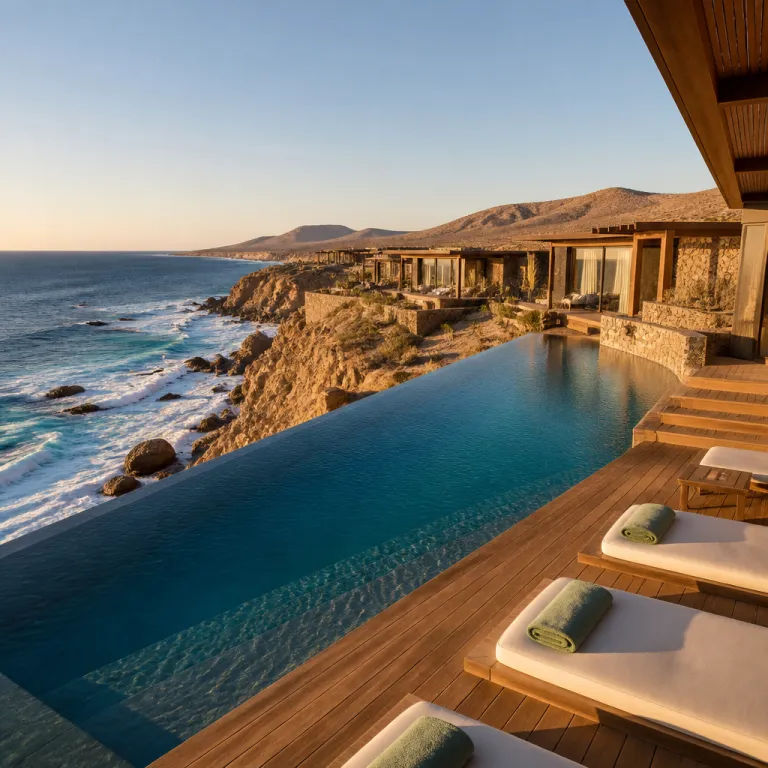
Why Punta Cachos peninsula in the Atacama Desert is redefining coastal luxury
The Punta Cachos peninsula in the Atacama Desert offers a rare meeting point between ocean and arid land in northern Chile. Here the cape rises only a few meters above sea level on the Pacific coast of the Atacama Region, where the ocean shapes a rugged shoreline that feels both remote and exquisitely intimate for luxury travelers. This is the kind of place where you will find silence, space, and a beautiful horizon that stretches unbroken for kilometres, broken only by the occasional fishing boat or circling seabird.
Punta Cachos lies on the coast of the Atacama Region, roughly 70 to 80 kilometres north of Caldera and about 100 kilometres from Copiapó Airport (CPO), north of the classic trekking circuits and far from the crowded routes of Patagonia in the south. While Torres del Paine and Los Glaciares National Park attract most visitors to South America, this peninsula offers a quieter, more contemplative adventure with refined coastal lodges and premium desert camps. A stay here lets you experience the high desert climate of the wider Atacama Desert while still feeling the cool marine air that rolls in from the Pacific Ocean each day.
Geographically, Punta Cachos is a cape on the Pacific shoreline of northern Chile, reached via regional hubs such as Copiapó and Caldera rather than the inland village of San Pedro de Atacama. That coastal position matters for travelers who want to plan a multi stop journey across South American landscapes, from the Andes mountains to the remote beaches of the north. When you choose a luxury property on or near this peninsula in the Atacama Desert, you gain a strategic base to visit other coastal places such as Bahía Inglesa, while still remaining within easy reach of inland desert highlights and observatories in the Atacama Region.
Ocean meets desert: climate, best time to stay, and wellness focused lodges
The climate around the Punta Cachos peninsula in the Atacama Desert is shaped by the cold Humboldt Current, which keeps temperatures mild year round. Days are generally clear and dry, with high levels of sunshine, while evenings can feel surprisingly cool for a desert in South America. This combination creates ideal conditions for wellness focused retreats that balance coastal air, desert light, and slow paced luxury; average daytime highs along this stretch of coast often sit between 18°C and 24°C even in summer.
The best time to stay in this part of Chile depends on the kind of experience you seek. If you prefer long, luminous days for photography and soft beach walks, the brighter months in the north are ideal, while shoulder seasons offer quieter properties and more personalised service. Many premium lodges design early morning and late afternoon activities to match the daily climate rhythm, from guided meditation on the cape to gentle trekking along the shoreline; a typical day might begin with yoga facing the Pacific Ocean and end with a sauna session scented with local herbs.
Chile’s national meteorological service notes that the Atacama coastal belt combines low rainfall with stable temperatures, a pattern that underlines why wellness oriented luxury hotels here often integrate both marine and desert elements into their architecture and spa menus. For guests interested in stargazing and night time experiences after a day by the ocean, curated desert lodges across the wider Atacama region provide exceptional sky viewing, and you can explore options through this dedicated guide to Atacama lodges that redefine the stargazing experience.
Designing a high end itinerary: from Punta Cachos to iconic Chilean landscapes
Luxury travelers rarely visit the Punta Cachos peninsula in the Atacama Desert in isolation, and the most rewarding journeys link several contrasting regions of Chile. A typical route might begin in Santiago, where refined city hotels set the tone for service standards before you fly north to the Atacama Region. For insight into urban elegance, you can study how one landmark property raised the bar for premium stays through this analysis of a benchmark luxury hotel in central Santiago.
From the capital, many guests continue to Copiapó Airport and then travel overland to Caldera and Bahía Inglesa, a beautiful beach area on the Pacific Ocean that contrasts sharply with the ochre tones of the inland Atacama Desert. This coastal place offers calm waters and pale sand, and it works well as a soft landing before you move north toward Punta Cachos or inland toward San Pedro and the classic desert lodges. Along the way you will find small fishing communities, wind shaped cliffs, and quiet coves that feel far removed from the busier resorts of South American coasts; the drive from Copiapó to Bahía Inglesa usually takes around one hour.
Ambitious itineraries then swing south, linking the arid north with Patagonia and the glaciers of the far south. After time on the Punta Cachos peninsula in the Atacama Desert, you might fly via Santiago to Punta Arenas, then continue overland to Puerto Natales for access to Torres del Paine National Park and the wider del Paine massif. Some travelers extend their journey across the border to Los Glaciares in Argentina, finishing in Buenos Aires before returning home, which creates a coherent narrative of Andes mountains, desert plateaus, and coastal capes across South America; detailed mapping tools such as this Atacama Chile map guide for luxury stays help you visualise these connections.
Signature experiences: trekking, coastal walks, and desert to ocean adventures
Staying on or near the Punta Cachos peninsula in the Atacama Desert allows you to combine gentle trekking with contemplative coastal walks. Trails here are less about steep ascents and more about tracing the line where the Atacama Desert meets the Pacific Ocean, often with only seabirds and the wind for company. On a clear day you will find that the light feels almost high alpine, even though you are only a few meters above sea level, and the crunch of salt crystals underfoot replaces the sound of forest leaves.
Luxury properties in this part of Chile typically curate small group excursions that emphasise pace and privacy. A guide might lead you along the cape at early morning, when the climate is cooler and the colours of the desert are softer, before returning you to the lodge for a long breakfast overlooking the water. In the afternoon, some itineraries include vehicle supported drives to inland places where the desert becomes more rugged, offering a different kind of adventure without sacrificing comfort; sunset picnics on low bluffs are a common highlight for guests.
For guests designing a longer South American journey, it is possible to pair these coastal experiences with more demanding trekking in Patagonia or even side trips to Easter Island. After quiet days on the Punta Cachos peninsula in the Atacama Desert, you could fly south to Puerto Montt for access to the lake district, or onward to Puerto Natales for multi day hikes beneath the towers of Torres del Paine. Others may choose to continue west across the Pacific Ocean to Hanga Roa on Easter Island, creating a rare itinerary that links desert capes, glaciated peaks, and remote Polynesian culture in a single, carefully planned trip.
How to choose a luxury or premium hotel near Punta Cachos
Selecting the right luxury hotel near the Punta Cachos peninsula in the Atacama Desert begins with clarifying your priorities. Some travelers want direct access to a quiet beach cove, while others prefer elevated viewpoints over the cape and the wider Atacama Region. In both cases, the most rewarding properties in Chile tend to be those that integrate local materials, discreet architecture, and strong environmental practices, such as solar power, water saving systems, and partnerships with nearby communities.
When you evaluate options, pay attention to how each place structures its daily rhythm and included experiences. A high quality lodge will usually offer guided walks, soft trekking routes, and interpretive outings that explain the geology and ecology of this part of South America, rather than simply providing a room with a view. You should also look for flexible dining that adapts to early departures and late returns, because the best time for excursions often coincides with sunrise and sunset when the climate is most comfortable.
Another factor is how well the property connects with the rest of your itinerary across Chile, Patagonia, and neighbouring regions. If you plan to continue south toward Punta Arenas, Puerto Natales, or even across the border to Los Glaciares and Buenos Aires, confirm that transfer times and flight schedules align with your preferred day of travel. Guests who will visit multiple places, from Bahía Inglesa to the Atacama Desert plateau and onward to national parks in the south, benefit from working with specialists who understand both the logistical and aesthetic flow of a luxury journey.
Extending your journey: from the Atacama Region to wider South America
A stay on the Punta Cachos peninsula in the Atacama Desert can be the anchor point for a broader exploration of South American landscapes. Many travelers pair this remote cape with classic highlights such as Torres del Paine National Park in Chilean Patagonia, or with urban breaks in Buenos Aires and Santiago. This approach lets you experience the full range of climates, from high desert dryness in the north to wind swept fjords and glaciers in the far south, often within a single two or three week itinerary.
Some itineraries also weave in maritime and island experiences that complement the coastal setting of Punta Cachos. After several days beside the Pacific Ocean, you might fly west to Easter Island and base yourself in Hanga Roa, where you will find a different cultural narrative yet a similar sense of isolation and horizon. Others may prefer to explore the fjords and channels south of Puerto Montt, combining small ship voyages with land based stays in carefully chosen places along the Chilean coast, where you can watch dolphins and sea lions from the deck before returning to a warm suite.
Whatever route you choose, the key is to respect distances and travel times across Chile and neighbouring countries in South America. The Andes mountains form a constant backdrop, but moving from the Atacama Region to Patagonia or from Punta Arenas to Los Glaciares requires thoughtful planning and at least one full day of transit. When you work with a specialist luxury booking platform that understands both the geography and the character of each place, you will find it easier to balance adventure, rest, and refined comfort across an entire year round travel calendar.
Key figures for planning a luxury stay around Punta Cachos
- Punta Cachos sits only a few meters above sea level on Chile’s Pacific coast, which means ocean views are close and immediate rather than distant or vertiginous (data referenced from wellness and mindful travel resources and regional topographic maps).
- The cape lies on the shoreline of the Atacama Region in northern Chile, a useful reference when aligning flight routes between Copiapó, Santiago, and onward connections to Patagonia or Buenos Aires; Copiapó Airport is roughly 800 kilometres north of the capital by air.
- Chile stretches for more than 4 200 kilometres from north to south, so combining the Atacama Desert, Punta Cachos, and Patagonia in one itinerary usually requires at least two internal flights and several days of overland transfers.
- Torres del Paine National Park and Los Glaciares together protect over 7 000 square kilometres of mountain and ice landscapes, according to Chilean and Argentine park authorities, which helps explain why many high end travelers allocate a full week to the south after time in the Atacama Region.
- Bahía Inglesa, often paired with Punta Cachos in coastal itineraries, enjoys more than 300 days of sunshine per year on average, based on figures from Chile’s meteorological service, making it a reliable beach extension to a desert focused journey.
FAQ about luxury stays near the Punta Cachos peninsula in the Atacama Desert
What is Punta Cachos and where is it located ?
Punta Cachos is a coastal cape in the Atacama Region of northern Chile, where the Atacama Desert meets the Pacific Ocean. It lies on a sparsely populated stretch of shoreline north of Caldera, forming part of a quiet coastal corridor. Luxury travelers use it as a discreet base for coastal walks and desert excursions away from busier hubs, often combining it with nearby Bahía Inglesa or inland visits to the Atacama Desert plateau.
What is the best time of year to visit Punta Cachos for a luxury stay ?
The area around the Punta Cachos peninsula in the Atacama Desert enjoys a dry, stable climate year round, with mild temperatures influenced by the cold Humboldt Current. Many guests prefer the brighter months for long days and clearer views, while shoulder seasons offer more privacy and softer light. Early morning and late afternoon are usually the best time of day for guided activities, regardless of the season, and coastal fog often burns off by mid morning.
How does a stay at Punta Cachos compare with visiting Torres del Paine or Patagonia ?
Punta Cachos offers a quieter, more contemplative experience than the dramatic peaks of Torres del Paine and the wider Patagonia region in the south. Here the focus is on coastal landscapes, gentle trekking, and the interplay between the Atacama Desert and the Pacific Ocean, rather than on high mountain passes or glaciers. Many travelers choose to combine both places in one itinerary, starting in the north before flying to Punta Arenas or Puerto Natales for national park adventures.
Can I combine Punta Cachos with Easter Island or other South American destinations ?
Yes, it is feasible to link the Punta Cachos peninsula in the Atacama Desert with Easter Island, as well as with cities such as Buenos Aires or coastal hubs like Puerto Montt. Most itineraries route through Santiago, from where you can connect to Hanga Roa on Easter Island or onward to other South American gateways. Careful planning is essential because distances across Chile from north to south are significant and flights may not operate every day.
What kind of activities will I find at luxury hotels near Punta Cachos ?
High end properties near Punta Cachos typically offer guided coastal walks, soft trekking in nearby desert areas, wellness sessions that use the calm climate, and curated excursions to other places in the Atacama Region. Some lodges also arrange photography outings, birdwatching, or combined desert and beach experiences that highlight the contrast between sand dunes and ocean cliffs. The emphasis is usually on small group or private activities that respect the quiet character of this remote cape in northern Chile.